Start with the number of nights you can spend in Tanzania and two or three experiences that matter most. We can then suggest a route that balances those interests with time on the road.
Frequently Asked Questions
Clear answers to help you plan a Tanzania safari with confidence.
Your questions, answered
Plan with clarity. Travel with ease.
Helpful answers for every stage of your Pori and Beyond Safaris journey.
The journeys on this website are starting points for a private proposal. Dates, accommodation and activities are confirmed with you before a booking is made.
Yes. A coastal extension can be considered alongside your mainland route. Leave enough time for the transfer and island stay; the connecting arrangements will be described in your proposal.
Describe your needs when you enquire, including anything essential to your comfort. We will check the proposed arrangements and explain what can be confirmed before you decide.
Dates, group size and the selected accommodation affect the quotation. We will provide the proposed services and total cost together so you can assess the journey as a whole.
Your request goes to the safari planning team. We use the details you share to clarify your priorities and prepare the next version of your travel plan.
For a first safari in northern Tanzania, 5 to 8 safari days usually creates a comfortable balance between wildlife viewing and travel time. A 3- or 4-day safari can work well for travellers with limited time or those adding safari to a Zanzibar holiday, while 7 to 10 days allows more time in the Serengeti and a less rushed pace. If you also want Zanzibar, many travellers plan a total trip of about 10 to 14 days.
For most first-time visitors, Tarangire National Park, Serengeti National Park and the Ngorongoro Conservation Area make an excellent combination. Tarangire offers distinctive baobab landscapes and strong elephant viewing, the Serengeti provides vast plains and exceptional predator opportunities, and Ngorongoro Crater offers concentrated wildlife in a dramatic setting. Lake Manyara can also be added when it fits the route and available time.
Tanzania offers rewarding safari experiences throughout the year, but the ideal period depends on your priorities. Drier periods can make wildlife easier to locate around permanent water, while greener periods bring fresh landscapes, dramatic skies and seasonal wildlife movements. For Great Migration trips, the most important decision is not simply the month but the part of the Serengeti ecosystem where your itinerary is positioned.
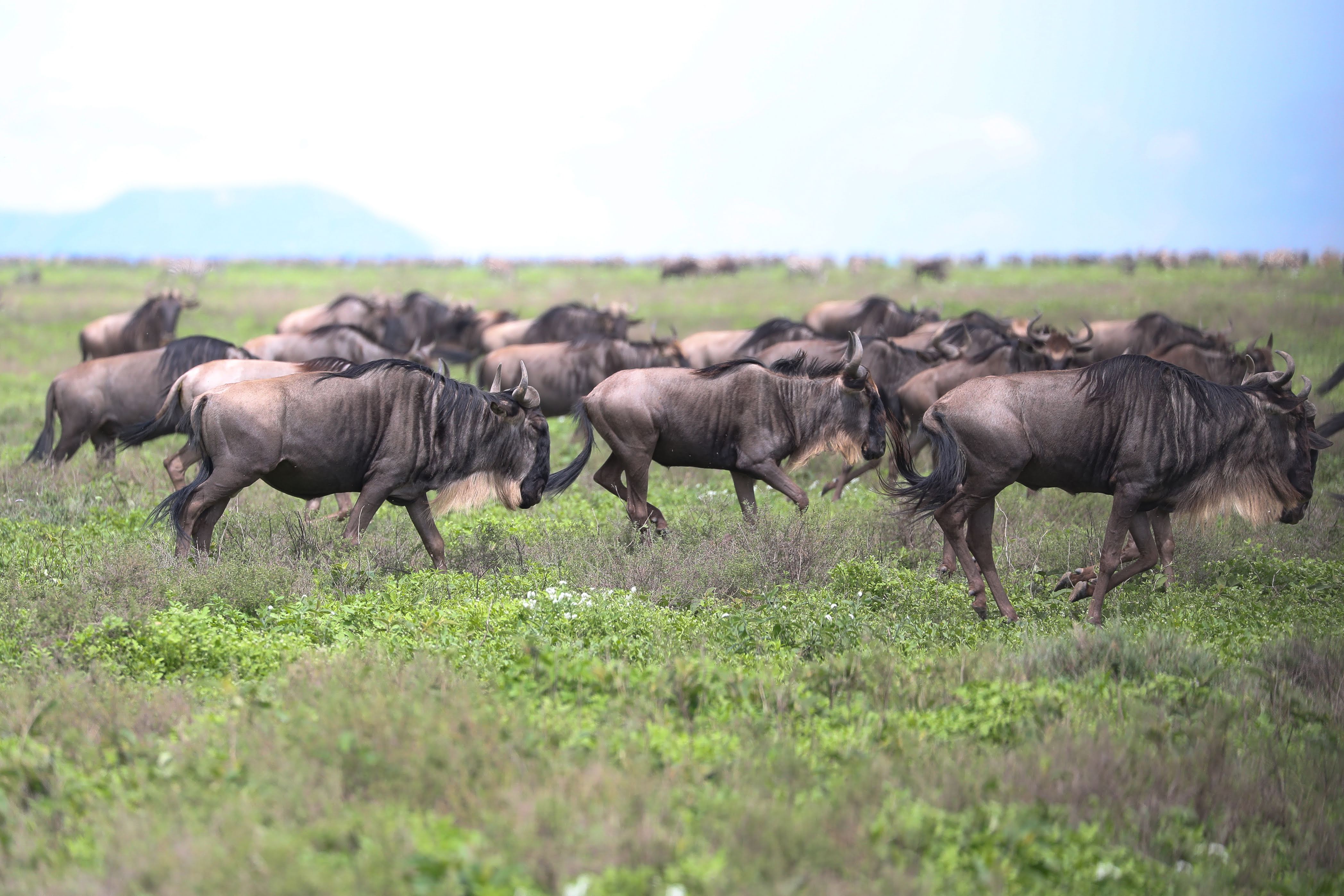
Yes. Much of the Great Migration cycle takes place within Tanzania's Serengeti ecosystem. The herds move through different areas in response to rainfall, grazing and natural conditions, so migration itineraries should be designed around travel dates. Pori & Beyond Safaris can recommend the most appropriate Serengeti region for your planned period, while recognising that exact herd locations and individual events cannot be guaranteed.
No. River crossings are natural events and cannot be scheduled or guaranteed. Herds may gather near a river for hours or even days before crossing, and they can change direction unexpectedly. A well-designed migration safari improves your chances by allowing enough time in the appropriate area, but responsible safari planning should never promise a specific crossing.
Tanzania provides opportunities to see lion, leopard, elephant, buffalo and black rhino, particularly when combining major northern safari areas. However, wildlife remains wild and sightings depend on location, season, animal movement and luck. We focus on creating strong wildlife opportunities rather than guaranteeing a checklist of species.
A private safari gives your travelling party its own vehicle and guide on the applicable road-safari sectors. This generally offers greater flexibility for photography, comfort stops, wildlife sightings and daily pacing. Group safaris can reduce cost, but private journeys are particularly useful for couples, families, photographers and travellers who value a personalised schedule.
Safari prices vary significantly according to duration, season, number of travellers, accommodation level, park fees, domestic flights and activities. Shorter comfort-level trips can cost substantially less than long luxury or fly-in journeys. The prices shown on our website should be treated as starting estimates unless a quotation specifically confirms a final amount for your dates and party size.
Accommodation rates, availability and sometimes transport arrangements vary across travel periods. High-demand dates may carry higher lodge rates, while other periods can offer better value. Because a safari quotation combines accommodation, park charges, transport and other services, the final price should be calculated using the actual dates of travel.
A 'from price' is an indicative starting price based on defined assumptions such as a particular accommodation level, travel period and minimum number of guests. It is not automatically the final price for every traveller. Your confirmed quotation will reflect your exact dates, party size, selected accommodation, activities and transport.
Depending on the confirmed itinerary, a safari commonly includes private safari transport, a professional guide, specified accommodation, meals according to the booked meal plan, park and conservation fees, game drives, airport transfers stated in the itinerary and drinking water during relevant road-safari sectors. Your quotation should always list inclusions clearly.
Common exclusions include international flights, visas, travel insurance, personal purchases, tips, optional activities, premium drinks and services not specifically listed as included. Domestic flights may be included in some itineraries and excluded in others, so travellers should rely on the final written quotation rather than assumptions.
Yes. The packages on poriandbeyond.com are intended as starting points. We can adjust the number of nights, destinations, accommodation level, activities and Zanzibar extension according to your dates, interests and budget. Tailor-made planning is particularly useful when you have specific wildlife, photography, honeymoon or family priorities.
Yes. Safari-from-Zanzibar itineraries can be designed using domestic flights to appropriate mainland airstrips or airports, depending on the parks you want to visit. A short safari may focus on one or two areas, while a longer trip can combine Serengeti, Ngorongoro and other northern destinations before returning to Zanzibar or continuing elsewhere.
Yes. Tanzania is especially well suited to a bush-and-beach itinerary. Many travellers begin with safari and finish in Zanzibar, allowing the active wildlife portion of the trip to flow into several slower beach days. Domestic air connections can make the transition efficient, subject to current schedules and availability.
For many travellers, safari first and Zanzibar second creates a natural rhythm: early safari mornings and active wildlife days are followed by a relaxed beach finale. However, the best sequence depends on international flight schedules, domestic connections, accommodation availability and personal preference.
Three nights can provide a short beach break, while four or five nights generally feels more relaxed. Travellers who want both Stone Town and a beach resort may benefit from additional time. The right balance depends on whether Zanzibar is simply a recovery period after safari or a major part of the holiday.
Northern Tanzania road safaris are commonly operated in purpose-built 4x4 safari vehicles with viewing features appropriate for game drives. The exact vehicle configuration depends on the operator and party size. Your final booking information should state the transport arrangements applicable to your itinerary.
On a private northern-circuit road safari, travellers commonly stay with the same driver-guide through the continuous road-safari portion of the itinerary. Fly-in sectors, Zanzibar services and specialised activities may involve different local teams. The final itinerary will clarify how each segment is handled.
Game-drive length depends on the park, wildlife activity, travel route and your preferences. Some days include a full-day game drive with a picnic lunch, while others combine wildlife viewing with a transfer between destinations. Private safaris provide useful flexibility, although park rules, operating hours and practical driving times still apply.
Not necessarily, but early starts can be valuable because temperatures are cooler, light is excellent for photography and some animals are more active. Your guide can discuss the plan with you each day. On a private safari, the schedule can often be adjusted when the route and park regulations allow.
Yes, Tanzania can be an excellent family destination when the itinerary is designed around the children's ages and travel experience. Private vehicles, sensible driving times, family-room options and a varied schedule can make a major difference. Some camps and activities have minimum-age rules, so these should be checked before confirmation.
Yes. Tanzania combines private wildlife experiences, atmospheric tented camps, beautiful lodges and Zanzibar beaches, making it particularly strong for honeymoons and anniversaries. A honeymoon itinerary can prioritise privacy, slower pacing, premium rooms and special experiences where available.
A safari lodge is generally a more permanent property with conventional buildings and facilities, while a tented camp uses canvas-based accommodation that can create a closer connection to the surrounding wilderness. High-quality tented camps can be very comfortable and may include en-suite bathrooms, proper beds, electricity and full-service dining.
Reputable safari camps operate with established safety procedures and staff guidance. Because many camps are in wildlife areas, guests should follow instructions about moving around the property, particularly after dark. Never approach or feed wildlife, and use the escort procedures provided by the camp.
Yes, subject to availability and the practical routing of the safari. If you have a preferred lodge or camp, tell us during planning. We can assess whether its location works well with your itinerary and prepare the quotation accordingly.
The accommodation shown in a sample package is not considered confirmed until a reservation is secured. If a preferred property is unavailable, we can propose a comparable alternative in a suitable location and explain any price difference before final confirmation.
Meal arrangements depend on the accommodation and itinerary. Safari lodges and camps commonly provide breakfast, lunch and dinner under full-board arrangements, while city or beach hotels may use different meal plans. Your final itinerary should specify the board basis for each stay.
Many established lodges and camps can accommodate common dietary requirements when notified in advance. Travellers should provide accurate dietary information during booking, especially for allergies or medically important restrictions. Availability can vary in remote areas, so early notice is important.
Drinking water is commonly provided in the safari vehicle during applicable road-safari sectors when stated in the package inclusions. Travellers should check their confirmed itinerary for the exact arrangement and carry additional water when advised by their guide.
Pack light, practical clothing in comfortable layers, a sun hat, sunglasses, sunscreen, closed shoes, personal medication and a small day bag. Neutral colours are useful in safari environments. Binoculars and a camera can greatly enhance wildlife viewing. Domestic flights may have stricter luggage limits than international flights, so check the final flight information.
Neutral shades such as khaki, beige, olive, brown and other muted colours are practical because they blend comfortably into natural environments and hide dust. Bright clothing is not automatically prohibited on standard vehicle safaris, but understated colours are generally easier and more versatile.
Binoculars are highly recommended even if your guide has a pair available. They help with birds, distant predators and small details that are difficult to appreciate with the naked eye. If wildlife viewing is an important part of your trip, having your own pair prevents waiting to share.
The ideal setup depends on your photography goals. A camera with a telephoto lens is useful for wildlife, while a wider lens is helpful for landscapes and camp scenes. Bring spare batteries, memory cards and appropriate charging equipment. Protect electronics from dust and keep weight restrictions in mind if your itinerary includes light-aircraft flights.
Most established lodges and camps provide some form of charging, although the hours, plug locations and power systems vary. Some safari vehicles may also provide charging options. Travellers should bring suitable adapters and consider a power bank for convenience.
Many lodges and camps offer Wi-Fi, often in common areas and sometimes in guest rooms, but speed and reliability can vary significantly in remote wildlife regions. Safari is a good time to expect occasional connectivity limitations rather than relying on constant high-speed internet.
Mobile coverage is available in many populated areas and some safari regions, but it can be weak or absent in remote locations. International roaming charges vary by provider. Travellers who require connectivity should discuss practical options before arrival.
Visa requirements depend on nationality and can change. Travellers should check the current requirements through official Tanzanian immigration channels or the relevant embassy before travel. Ensure that your passport meets the applicable validity and entry requirements.
Health recommendations depend on your medical history, nationality, recent travel and itinerary. Pori & Beyond Safaris does not replace professional medical advice. Consult a qualified travel-health professional well before departure and check official entry-health requirements applicable to your route.
Comprehensive travel insurance is strongly recommended. A suitable policy should be considered for medical emergencies, evacuation, trip cancellation or interruption, baggage and the activities included in your itinerary. Read the policy terms carefully to understand exclusions and coverage limits.
Malaria risk varies by region and individual circumstances. Travellers should obtain personalised advice from a qualified healthcare professional about prevention and any medication appropriate for them. Practical measures such as avoiding mosquito bites are also important.
Tanzania welcomes large numbers of international visitors, but normal travel precautions remain important. Follow current government travel advice, safeguard valuables, use arranged transport where appropriate and follow your guide's instructions in wildlife areas. Conditions can change, so travellers should review current advice before departure.
Wildlife should always be treated as wild and unpredictable. Safari guides maintain appropriate viewing practices and follow park rules, but guests also have a responsibility to remain inside the vehicle when instructed, avoid feeding animals, keep noise under control and follow camp safety procedures.
Only where it is permitted and considered safe. National parks and conservation areas have rules about where visitors may leave vehicles. Walking safaris and other on-foot experiences require authorised locations and appropriate guides. Always follow your safari guide's instructions.
Walking safaris are available in selected areas and under specific operating rules. The experience focuses on the landscape at ground level, including tracks, plants, insects, birds and ecology. Availability, age restrictions and pricing depend on the destination and operator.
Yes, balloon safaris operate in selected safari areas and can be added where they fit the itinerary. They usually require advance booking, involve an early start and are subject to weather, operational conditions and availability. Balloon flights are normally an additional-cost activity unless specifically included.
Tipping is customary in Tanzania's tourism industry but should remain voluntary and based on service. Suggested amounts can vary by company, group size and service type. We can provide current tipping guidance with your pre-departure information rather than presenting it as a compulsory charge.
Booking several months in advance generally provides better accommodation choice, especially during popular travel periods, migration-focused seasons, festive dates and for highly sought-after camps. Last-minute safaris can sometimes be arranged, but flexibility may be required.
Confirmation normally requires approval of the final itinerary, acceptance of the booking terms and payment according to the stated deposit schedule. The exact deposit amount, balance due date, cancellation conditions and payment method should appear in your official quotation or booking terms.
We review your dates, number of travellers, interests, preferred comfort level and any special priorities. We then prepare a personalised safari proposal with a recommended route, accommodation and quotation. You can request adjustments before confirming. Once the itinerary is approved and the required payment is received, reservations are secured according to availability and the booking terms.
Need a little more guidance?
Talk to our team